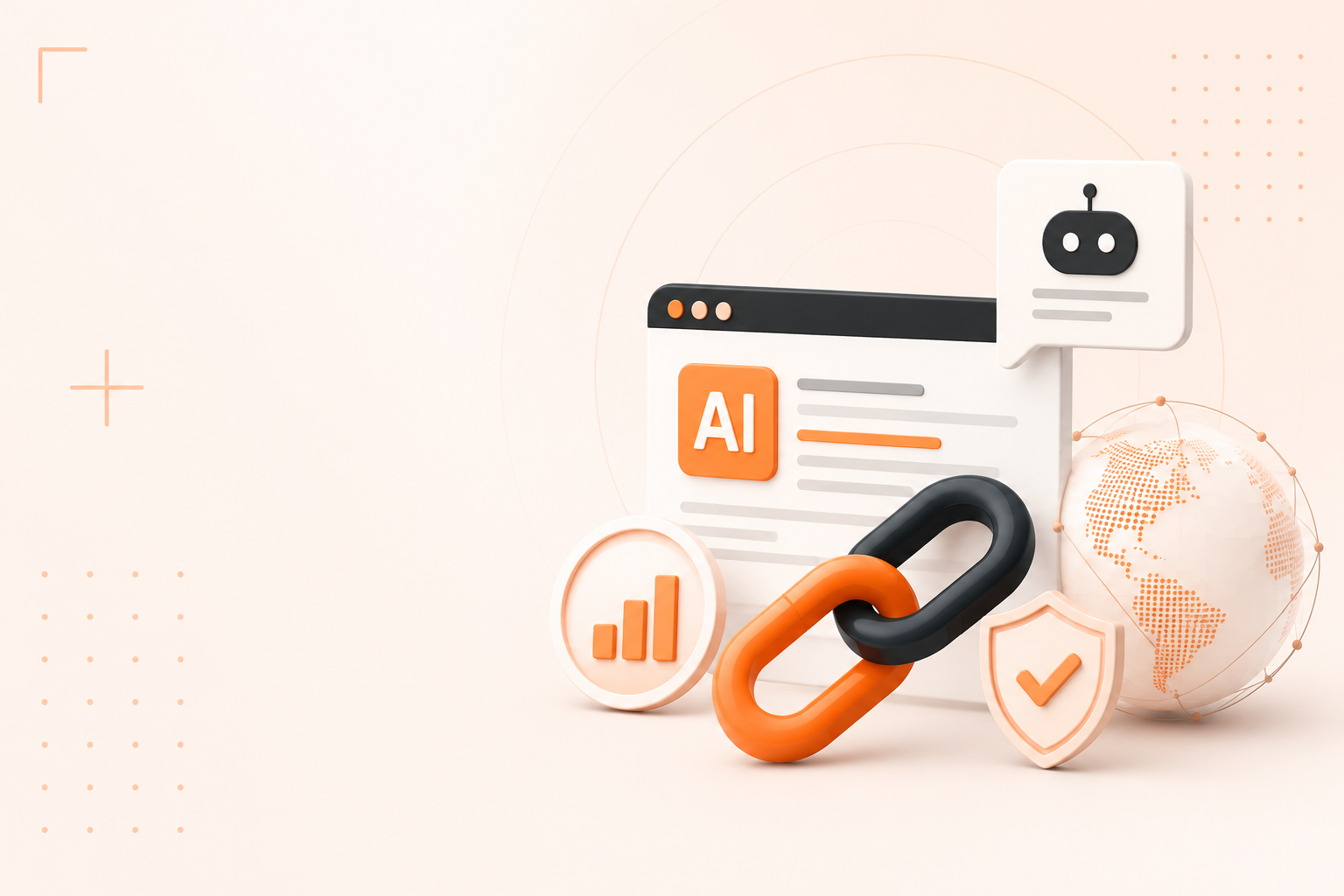
Two things are true at the same time. Google still uses backlinks as one of the strongest signals for authority, trust, and ranking potential. And in 2026, brands are also competing to be cited inside AI-generated answers from ChatGPT, Perplexity, and Google AI Overviews. The best link building 2026 strategy works for both at once.
High-quality editorial links still help pages move. Relevant placements still matter. Strong referring domains still separate serious SEO campaigns from websites that rely on content alone.
But search has changed. In 2026, brands are not only competing for blue links on Google. They are competing to be cited, mentioned, and recommended inside AI-generated answers.
The best link building 2026 strategy is no longer just about passing authority from one website to another. It is about building a visible, consistent brand footprint across trusted sources that both search engines and AI systems can recognise. Link building now sits at the intersection of traditional SEO and AI visibility.
What Has Not Changed in Link Building
Before talking about AI, it is important to be clear about what has not changed. Backlinks are still important. Every few years, someone declares that link building is dead. Then the same pattern repeats. Competitive websites with strong backlink profiles continue to outrank weaker domains, especially in niches where trust, authority, and expertise matter.
The reason is simple. A good backlink is still a third-party signal. When a relevant website links to your page, it tells search engines that your content is worth referencing. When many trusted websites do that consistently, your domain becomes harder to ignore.
Low-quality links, irrelevant placements, spammy directories, and private blog networks can still create risk without producing meaningful growth. In 2026, the gap between useful links and useless links is wider than ever. The fundamentals still matter:
- Relevance matters. A backlink from a website in your niche is usually more valuable than a random high-DR placement with no topical connection.
- Editorial standards matter. A link placed inside real content on a site with real readers is stronger than a link on a thin page created only for SEO.
- Traffic matters. If the linking domain receives real organic traffic, that is usually a better sign than a site with inflated authority metrics and no audience.
- Consistency matters. Ten strong links every month usually create a better authority pattern than fifty links once and then silence.
So, the first rule of link building 2026 is not to abandon the basics. It is to apply them more carefully. AI has not made traditional link quality less important. It has made real authority more important.
What Has Changed: The AI Citation Layer
The major shift is that search is no longer only about rankings. AI search engines and answer engines do not simply show users a list of pages. They summarise information, choose sources, and often mention specific brands inside the answer itself. That creates a new layer of visibility.
A business can now win or lose attention before the user ever clicks a traditional search result. If an AI tool recommends three companies, cites three sources, or summarises a category using specific brand names, those mentions influence buyer perception before any click happens.
This is where AI visibility SEO becomes important. AI tools need sources. They need patterns. They need trusted references across the web. If your brand is regularly mentioned on authoritative websites in your niche, you are building signals that go beyond a normal backlink profile.
The old question was: can we rank higher on Google? The new question is: can search engines and AI systems understand that we are a trusted brand in this category? Backlinks still help pages rank. But editorial mentions, brand citations, niche coverage, and source diversity help AI systems understand who you are, what you do, and why you matter.
AI & LLM VISIBILITY
Want your brand cited inside ChatGPT, Perplexity, and Google AI Overviews?
Vladenza builds authority across the sources AI systems trust most — alongside traditional link building.
Why Traditional Link Building Already Builds AI Visibility
Many businesses think AI visibility is a completely separate discipline. In reality, good link building has already been doing part of the job for years.
If your links are placed on real, indexed, traffic-bearing websites, those pages are not only passing authority. They are also creating public evidence that your brand exists in a specific topic space. That matters.
A guest post on a respected automotive publication does more than send a backlink to an auto parts website. It places the brand inside an industry context. It associates the brand with specific topics, product categories, problems, and buyer questions.
A mention on a SaaS blog does more than support rankings. It helps connect the brand with a product category, use case, or comparison set. A relevant crowd mention does more than send referral traffic. It shows how real users discuss the brand or topic in natural language.
This is where the line between traditional link building and LLM SEO becomes thinner. AI systems are built to understand patterns in language and authority. When your brand appears repeatedly across credible pages, niche publications, structured guides, and community discussions, you create a stronger footprint.
The backlink is still valuable. The surrounding context is now valuable too. In 2026, the context around the link matters even more than before:
- What topic is the page about?
- What is your brand being associated with?
- Is the surrounding content useful?
- Does the placement appear on a site with a real audience?
- Does the mention reinforce the topical identity you want AI systems to understand?
A backlink without context is weaker than a backlink that clearly places your brand in the right conversation. This is one of the biggest link building trends for 2026.
Link Building Is Becoming Brand Training
The most useful way to think about link building in 2026 is this: you are not only building links. You are training the internet to understand your brand.
If a cybersecurity company appears once on a random marketing blog, that does not create much topical authority. But if the same company appears across cybersecurity publications, compliance blogs, SaaS security roundups, data protection guides, and relevant forum discussions, the pattern becomes clearer — to search engines, AI systems, and potential customers alike.
That is the real value of AI SEO link building. It is not just about getting any backlink. It is about creating repeated, consistent signals around the topics where your business wants to be trusted.
This is also why cheap link building becomes even riskier in an AI-driven search environment. A random backlink from a generic site may help a spreadsheet look full, but it does not teach AI systems anything useful about your business. The goal is not only more links. The goal is clearer authority.
What to Add in 2026 That Was Not Necessary Before
The fundamentals of link building still matter, but the strategy needs new layers. In 2026, businesses should think beyond simple backlink acquisition and build a wider authority footprint.
Topical Clustering Across Third-Party Sites
Topical clustering is usually discussed as an on-page SEO strategy. In 2026, the same idea applies off-site. If your brand wants to be known for SaaS link building, it should not appear once in a random article and then disappear. It should appear across multiple relevant sources discussing SaaS SEO, B2B content, link acquisition, and organic customer acquisition.
That creates a topic cluster across the web. The more consistent the pattern, the easier it becomes for search engines and AI systems to connect your brand with the right category. Your own blog can say you are an expert. Third-party coverage makes that claim more believable.
Brand Mention Consistency
In older link building campaigns, unlinked brand mentions were often treated as missed opportunities. In 2026, AI systems can understand brand mentions even when they are not linked. If your company is repeatedly mentioned in relevant contexts across trusted pages, those mentions contribute to your wider visibility footprint.
A linked mention is still stronger for traditional SEO. But an unlinked mention on a strong, relevant source can still help AI systems associate your brand with a category, product, or expertise area. A strong generative engine optimization strategy needs repeated clarity across all placements.
Source Diversity
Traditional link building often focused on editorial guest posts. That still works, but source diversity matters more now. AI systems learn from different formats and source types. A stronger campaign may include:
- Editorial guest posts on niche publications
- Relevant forum or community mentions
- Niche directory placements where appropriate
- Comparison and roundup mentions
- Partner or integration pages
- Expert quotes and contributed insights
A single high-DR link can help, but it does not create the same brand footprint as being visible across several trusted source types. The goal is to appear in the places your industry already trusts.
FAQ and Structured Content
AI-generated answers often favour content that is easy to understand, extract, and summarise. Pages with clear headings, concise answers, FAQ sections, and direct definitions are easier for AI systems to interpret — both on your own website and in off-site content.
An article that directly answers a specific buyer question is far more useful for AI visibility than vague thought leadership. Specific beats generic. Clear beats clever. Structured beats messy.
The Link Building Strategy That Works for Google and AI in 2026
A strong link building 2026 strategy should work for both traditional rankings and AI visibility. That means combining several placement types instead of relying on one tactic.
Editorial Guest Posts
Editorial guest posts still matter because they do two jobs at once. For Google, they provide contextual backlinks from relevant pages. For AI visibility, they place your brand inside detailed content on websites that may already be trusted within your niche.
The key is quality control. A guest post on a real industry publication is not the same as a thin article on a generic blog that accepts every paid submission. The first creates authority. The second creates noise. The best placements are:
- Relevant to your niche
- Indexed by Google
- Written for real readers
- Published on websites with organic traffic
- Placed inside useful, non-spammy content
- Supported by natural anchor text
GUEST POSTING
Get editorial placements on real niche publications with organic traffic.
Relevant, indexed, and written for real readers — not just for link metrics.
Enthusiast Forums and Practitioner Communities
Forum and community mentions are often underestimated in link building. Not every community mention will produce a followed backlink — and that is fine. The value is different: practitioner communities show how real people talk about problems, tools, services, and brands, which is exactly the kind of natural signal AI systems pick up on.
The better approach is to contribute useful answers, mention relevant resources naturally, and appear where your audience already spends time. For many niches, one genuine community mention can be more useful than a polished guest post on a site nobody reads.
Niche Edits in Indexed Content
Niche edits can still work when placed carefully. The advantage is speed — instead of waiting for a new article to be published and indexed, your link is added to an existing page that may already have traffic, backlinks, and search visibility. That makes authority transfer faster.
Niche edits should be judged by relevance, page quality, traffic, and context — not only domain authority. See how niche edits compare to guest posts for different campaign goals.
Structured On-Page Content
Link building cannot carry weak content forever. If AI Overviews and answer engines are becoming more important, your own website needs content that is easy to reference. Good on-page content includes direct answers near the top, clear heading structure, FAQs, and evidence backed by practical explanations.
This does not replace link building. It makes link building work harder. When strong backlinks point to structured, useful pages, you improve both ranking potential and AI visibility simultaneously.
What Businesses Should Stop Doing in 2026
The fastest way to waste a link building budget is to use 2020 tactics in a 2026 search environment.
Chasing DR Without Context
A DR 70 link looks good on a report, but it may not help if the site has no topical relevance, no real audience, and no useful content around the link. A DR 45 link from a niche-relevant publication with real traffic can be more valuable than a DR 75 placement from a generic website that publishes everything. In 2026, context matters as much as metrics.
Publishing Generic Guest Posts
Generic guest posts are easy to produce and hard to justify. An article called "Top Digital Marketing Tips for Business Growth" can technically include almost any link, but it says nothing specific about your brand, your category, or your expertise. AI visibility depends on clear associations — generic content does not create them.
Ignoring Brand Mentions
If your SEO reporting only counts live backlinks, you may miss part of the picture. Brand mentions, expert quotes, community references, and roundup inclusions can all support wider AI visibility, even when they do not always include followed links. Modern campaigns should track both links and brand visibility.
Treating AI SEO as a Separate Trend
Some businesses are trying to build an AI SEO strategy from scratch while ignoring the authority signals they should already be building. That is backwards. The best AI visibility strategy starts with the same things that make a brand trustworthy across the web:
- Strong content
- Relevant backlinks
- Consistent brand mentions
- Clear topical positioning
- Trusted third-party references
- Useful structured information
AI has changed the surface of search. It has not removed the need for authority.
How to Measure Link Building Success in 2026
Measurement also needs to evolve. Traditional SEO metrics still matter — referring domains, ranking movement, organic traffic, link quality, and anchor distribution. But in 2026, you should also pay attention to AI visibility indicators:
- Whether your brand appears in AI-generated answers for relevant prompts
- Whether competitors are cited more often than you in AI tools
- Which third-party sources AI tools reference in your niche
- Whether your brand is mentioned across trusted industry content
- Whether your own pages are structured clearly enough to be cited
SEO teams can no longer only ask "Are we ranking?" They also need to ask "Are we being recognised?" That recognition is built through authority, consistency, and relevance. See how we approach AI visibility alongside traditional link authority.
Why the Next Three Years Will Reward Authority Builders
The next phase of SEO will not reward businesses that publish endless average content and hope for the best. It will reward brands that are visible in the right places. That means websites with strong backlink profiles, clear topical authority, real third-party mentions, and useful content will have an advantage across both Google and AI search.
This is especially important for SaaS companies, agencies, B2B providers, financial services, healthcare brands, and legal firms in competitive niches. Your buyers are not only searching one keyword and making a decision. They are comparing options, reading reviews, asking AI tools, and scanning summaries before they speak to sales.
Link building supports that journey by making your brand more visible across the information sources buyers already trust. Browse real campaign results across different industries and growth stages.
Link Building in 2026 Is About Being Worth Citing
It is no longer enough to be worth linking to. You need to be worth citing.
That does not mean every campaign needs to chase viral PR or top-tier media placements. It means your brand needs a consistent, credible footprint across the web: appearing in the right conversations, mentioned in the right contexts, with links from pages that make sense and content that answers real questions clearly.
- Appear in the right conversations
- Be mentioned in the right contexts
- Earn links from pages that make sense
- Publish content that answers real questions clearly
- Build a strategy that works for both search engines and AI systems
That is the future of link building. Not spam. Not shortcuts. Not random DR chasing. Real authority, built consistently across the sources that matter.
BUILD AUTHORITY IN 2026
Traditional rankings and AI visibility — both start with the same foundation.
Explore our link building packages or see how we build AI visibility for brands in competitive niches.